Goal: increase market share by targeting teens and young adults
Wendy Clark, President of Strategic Marketing at Coca-Cola, says that this most of this target market is self-obsessed and that if they like their image, they like their name second most which became the foundation of their "Share a Coke" campaign, which ran last year and is now repeating in 2015 due to its success.
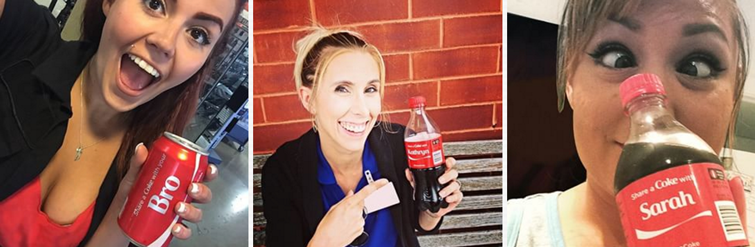
This popular advertising promotion involves printing first names (1,000) on 20-ounce bottles of Coke, Diet Coke and Coke Zero. For people with less common names, Coke is offering the chance to order a custom bottle online with a name or personal message.
The goal is to encourage Coke drinkers to share pictures of themselves and their "Share a Coke" bottles on social media. "We can't wait to see how fans share their amazing stories again this year - in real life and through social media," said Jennifer Healan, a marketing director at Coke. And the sharing was viral!
The success of Coca-Cola's "Share a Coke" campaign inspired brand fans across the world to re-engage with the most popular soft drink of all time. Wendy Clark said this of Coca-Cola's dedication to mobile:
"Mobile is at the core of everything we're doing. If we can't make a story work on a 4-inch-by-2-inch screen, then it doesn't work and it doesn't go further."
Coca-Cola recognised that people would turn to mobile to find their own customised Coke. Wendy Clark reveals in this video how "Share a Coke" inspired consumers to take action and how Coca-Cola was there for them on mobile.
With Facebook organic reach on the decline businesses must seriously consider paying for their posts to appear in the news feeds of their fans. Don’t pay for every post however, choose the best ones. What are the options?
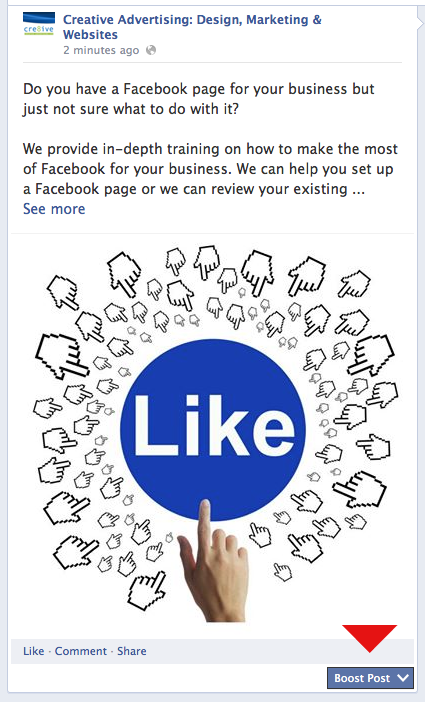
Boosting a post is the most straightforward option.
When you’re publishing your post you can simply choose to boost by clicking the ‘Boost Post’ button in the lower right corner of your post. Boosting posts is the quickest and easiest way to increase the reach of posts that need to be seen soon, for example latest news and links with rich media like photos or videos.
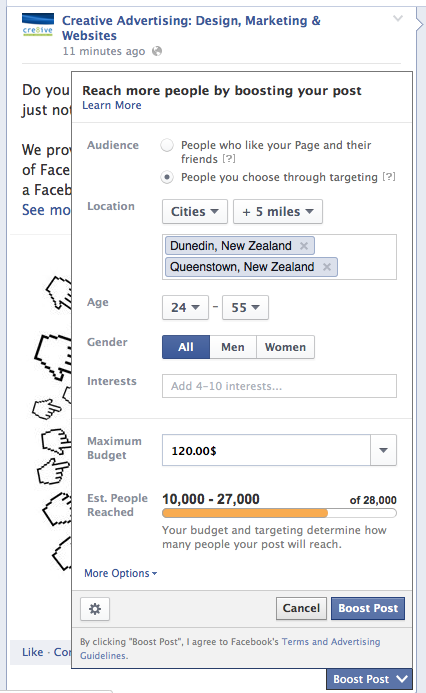
After you click ‘boost’ you then have the option of “People who like your page and their friends” or “People you choose through targeting.”
One problem with choosing the first option is that your fans’ friends may not be interested in your business and may not be located in the area you want to target. Which means you may be wasting your budget by paying for your post to appear in their news feed.
If your goal is to engage your current fans, don’t choose the first option. You’re better off using a promoted post and choosing that the ad only go to your community. However, if you’ve already boosted a post to fans and their friends, you can still change your audience. Just go to your Ads Manager and turn off the segment of the ad that goes out to friends of fans.
If your goal is to drive some targeted traffic to your website, or reach a new audience, then choose the second audience option ‘People you choose through targeting’.
When you boost a post, the ad results show up in your Facebook Ads Manager where you can access the results and run more detailed reports.
Tips for Which Content to Boost
Make sure you only promote your own content and direct traffic back to your website, not someone else’s.
Select content that’s helpful for your audience. Highlighting sales messages from time to time is acceptable but primarily choose content that will be of value for your audience.
Content that should definitely be promoted is where you harvest email addresses. If you’re offering something for free with an opt-in, definitely promote that content so you can transfer as many fans to your email list as possible.
It’s important to note that Facebook has guidelines about images only having ‘20% text on photos’. If your post has a link in it and the link pulls in a photo that has too much text, you won’t be able to boost or promote it.
Promoting a Facebook Post
This is achieved via the Facebook Ads Manager and gives you more options when it comes to targeting, budget and bidding options. For example, this method allows more options regarding the audience you want to reach, and allows you to pay per click or set a daily limit. The results are also shown in Ads Manager. On the downside, setting up a promoted post takes more time and requires some forward planning.
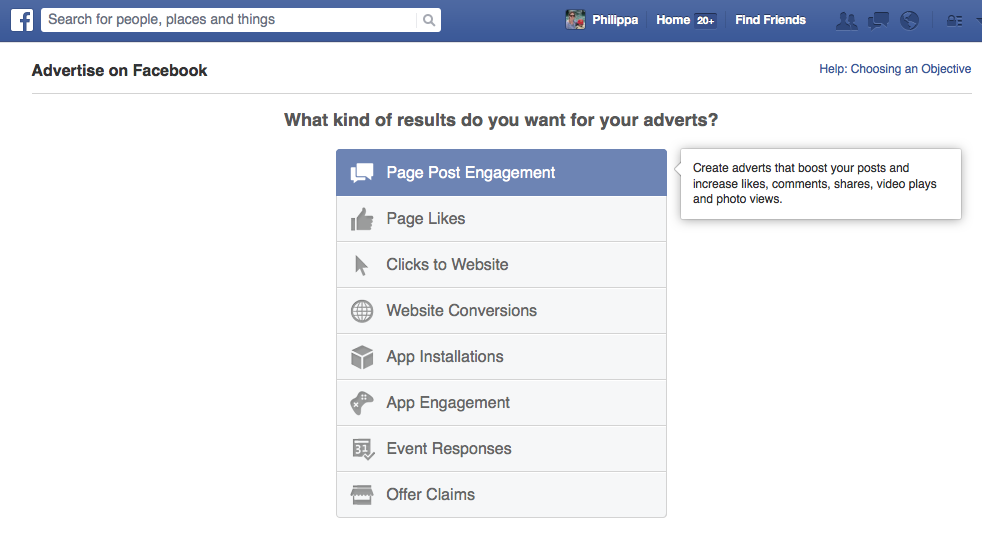
To promote a post, go to https://www.facebook.com/ads/create/ and select Page Post Engagement. Use the drop-down menus to choose the page and the exact post you want to promote.
You will see the ‘Offer Claims’ use this option if you want to promote some kind of deal. With one of our clients, Back in Motion, we offered 50% off massage for new clients and this method worked well – over 75 people ‘claimed the offer’ where they received an email. (Facebook generated an automatic email with information we provided).
So it is better to boost or promote?
It really depends on the type of post and timing. Many marketers use the boost post option because it’s easy and accessible. This doesn’t necessarily make it the best option to reach the perfect audience however. If you have the time and you have a really great piece of content you want to push, promoted posts should be employed first as it allows more control over who sees your ad and how you pay for it.
If you would like help setting up an advert or campaign, call 03 474 1075 or email cre8ive@cre8ive.co.nz
In this fast-paced world, you have to make your message count. Don’t get caught up in trying to say everything in one post or tweet. Aim to make your content as long as it takes to convey the message, and no longer.
Twitter Tweets shorter than 100 characters have a 17% higher engagement role.
Facebook Posts with 40 characters receive 86% more engagement than posts with a higher character count.
Google Plus If your Google+ headline can’t be contained in one line, your first sentence must be gripping teaser to get people to read more.
Paragraphs Opening paragraphs with larger fonts and fewer characters per line make it easier for the reader to focus and jump quickly from one line to the next.
Email Subject Lines Subject lines containing 28-39 characters get an open rate of 12.2% and click rate of 4% on average.
Blog Headlines Only the first 3 words and the last 3 words of a headline tend to be read. Rather than worrying about length, you should focus on making every word count.
Blog Posts Overall, 74% of posts that are read are under 3 minutes long and 94% are under 6 minutes long.
YouTube The most popular videos are pretty short. After analysing the length of the top 50 YouTube videos, the average length was 2 minutes 54 seconds.
Podcast The average Podcast listener stays connected for 22 minutes on average. Studies show students zone out after 15-20 minutes of lecture time. After 20 minutes, attention and retention rates crash.
This concept is about carefully combining and coordinating your marketing efforts to deliver a consistent and compelling message about your organisation and products/services. The challenge is ensuring consistency and uniformity across the many media channels available. And importantly, it has to not only be simple for the target audience to connect with and understand, but it also has to work in the marketplace. In an already saturated and cluttered environment of media and advertising, success requires more than ‘throwing darts’ at individual communication avenues. In an integrated campaign, advertisements, direct mail, PR, online marketing, and all other aspects of the campaign must be consistent in message and approach. The goal is to achieve a seamless communication with your target markets that ripples through the re-determined variety of channels. But for an integrated campaign to be great, it takes more than just consistent messaging across the board. A truly excellent integrated campaign takes the multi-platform approach to the next level by using each channel to feed into a complete and encompassing story.
Did you realise that only a small percentage of what you post in your Facebook page will actually been seen by your Fans? This is called 'Facebook Reach' which is the number of unique people who saw your content. EdgeRank Checker published research on 1 April 2014 detailing that organic reach for most Facebook pages currently hovers around 6.5% — down from 17% only 24 months ago. It is believed that organic reach will ultimately decline to right around 1%.
Organic reach is free.It happens in the news feed when your fans see your updates.
Viral reach consists of the people who see your content because one of your fan likes, comments or shares your post. Their friends will see your post even if they aren’t fans of your page. The same is true if you’ve paid to reach larger audiences who may or may not already be your fans. If one of those targeted people shares etc, their friends will see it as well.
What does this mean for your business page? If you want your fans to see important content you need to be very creative with how you present it or pay for this to be seen. We offer in-depth Facebook Training for small to medium-sized businesses that covers how to increase Facebook likes and engagement through viral reach and paid.
With organic reach on the decline ensure your messages reach your Fans by creating highly engaging posts - ones that attract comments, likes or shares. Here are some helpful suggestions to get more interaction.
Photo posts get 39% more interaction
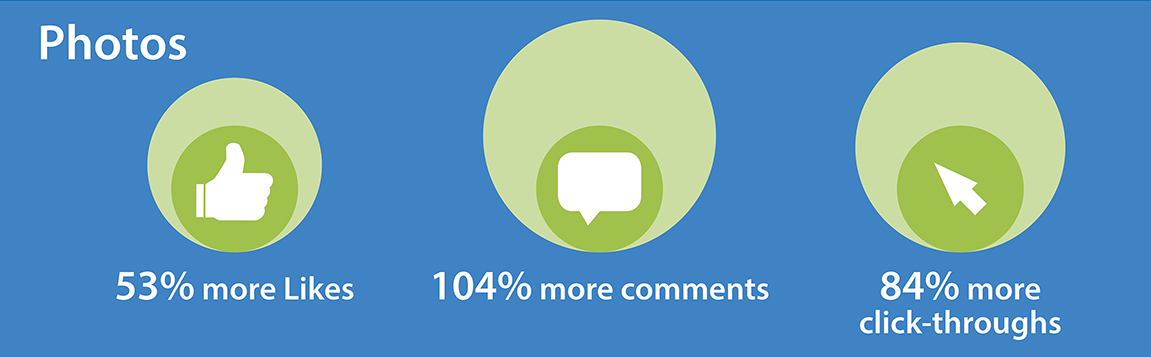
Not only do photos have more engagement than links, videos or text-based updates, they actually account for 93% of the most engaging posts on Facebook. According to Kissmetrics, photos get 53% more likes, 104% more comments and 84% more click-throughs on links than text-based posts.
Facebook is always refining and introducing new features in an effort to give users a more valuable experience. Unfortunately, that doesn’t always work in businesses favour when it comes to reaching as many people as possible with content.
Facebook Reach is the number of unique people who saw your content. There are different kinds of reach: post, page, organic, viral and paid.
Organic reach is free. It happens in the news feed when your fans see your updates.
Follow these 3 Key Points for all your Social Media Promotion
Social media is all about interaction and engagement with your audience. In order to have engaged fans that you don't overwhelm with sales pitches in every post, you need to focus on the three following key aspects:
Visual Storytelling: put time and effort into crafting your brand story on social media. The most effectively way to tell that story online is through visuals. Michael Kors employs stunning visuals as seen here. Dior uses well-crafted videos with strategically chosen locations such as the Château de Versailles, emblem of Dior's tradition, which bought to life the Dior Fall 2013 collection. Christian Dior Video on Facebook.
Likeable Media provided these statistics: Photos make up 93% of the most engaging content on Facebook; they get 53% more likes, 104% more comments and 84% more click-throughs on links than text-based posts. Tweets with image links get 2X the engagement rate of those without. It's vital to consider how to make compelling, visual content that doesn't look like an advertisement, in other words, content that consumers want to share.
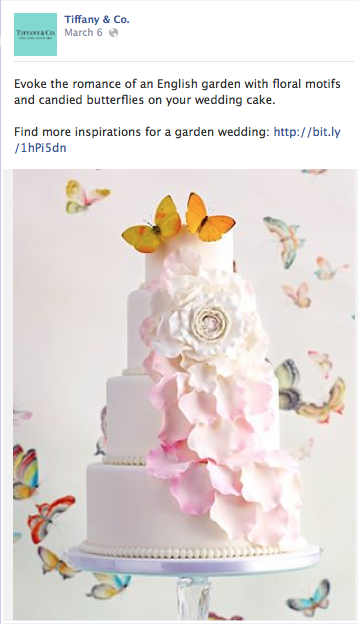
A Balanced Approach: It’s far too easy for fashion companies to fall into a trap of only pushing products and sales. The most successful fashion companies in social have a well-balanced approach that also takes time to nurture conversations with fans on what the fans find valuable.
Take a look at the high fashion brand, Tiffanys. They post helpful information about weddings, such as this post.
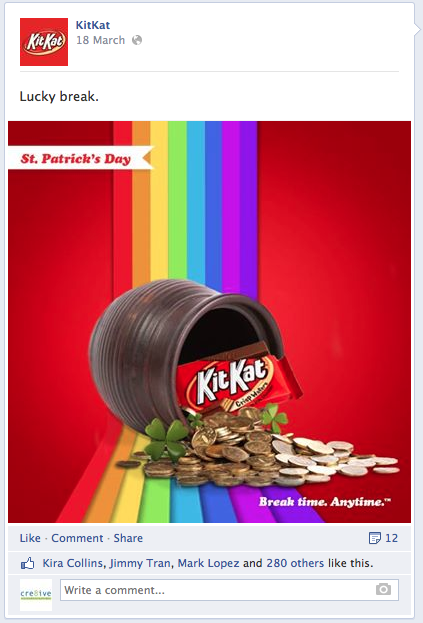
Strategic Use of Sales / Promos: It's all about planning and timing to create a perfect pitch for your fans and push them to purchase. Strategically plan your sales posts/tweets around your fans' lives and interests (summer, school, season changes), and employ visual creativity. The Kit Kat brand often employs clever ways of displaying their product with holiday periods such as this post for St Patrick's Day.
The Network of Digital Marketers (formally known as eMarketing Network) was set up to provide support to agencies, suppliers and practitioners of email marketing, online advertising, eCommerce and online promotions. Their objective is promote ethical best practice eMarketing in New Zealand.
They have written guidelines on best practices and ethical conduct regarding the use of email for marketing purposes.They have 6 Guiding Principles for eMail Marketing to safeguard people from receiving unwanted or intentionally deceptive emails. Each of the Principles complements the next and should be
viewed as a collective entity. In brief they are:
1. Send only relevant offers to consenting recipients
2. Include an unsubscribe function
3. Tell the recipient who you are
4. Apply the basic "truth in advertising" doctrine
5. Do not abuse permission
6. Do not harvest email addresses
Begin planning your holiday campaign in advance so you are ready to launch before the ‘silly season’ is underway. A good way to do this is by developing a Promotional Calendar. Use this as the basis of all promotional activities you conduct throughout the holiday season including holiday hours, late nights, specials and discounts.
Repetition sells. Send multiple emails, direct mailers or holiday cards announcing your sales. (But don’t go ‘silly’ and send daily announcements – find the right balance so you don’t annoy your customers)
Create your email calendar. Email is one of the most powerful tools in your online marketing kit, serving as a great way to deliver promotions directly to your customers. Your email calendar should include email content, list segmentation, copywriting, design and testing. To make the most of this opportunity, align your email sends with the timing of your biggest promotions that will be identified in your Promotional Calendar. Continue reading...