9 Top Tips on Pay-Per-Click Advertising

1. What is pay-per-click advertising?
Pay-per-click, or PPC, is one of the tools you can use to promote a business online, the most well-known is Google Adwords. It is a specific type of search engine marketing designed to drive traffic to your website. When certain keywords are entered into a search engine, your ad appears in the search results. You only pay when a user clicks on your ad.

2. Where do ads appear and what do they look like?
Search engines like Google and Bing allow businesses and individuals to buy listings in their search results (ads). They appear alongside, and increasing above the non-paid organic search results. The ads can have several different looks depending on which search engine you decide to advertise with.

3. What are the benefits of PPC ads?

  • Speed - PPC ads can be launched quickly, bringing in targeted traffic and leads to your website almost immediately.
  • Cost - You only pay when an ad is clicked. It’s easy to manage costs, track conversions, and determine your Return On Investment (ROI).
  • Reach - You can target specific target markets and bring in additional traffic to your website.
  • Control - You can modify your ads, try new search terms, pause campaigns and restart whenever.
  • It Can Be Very Effective - When set up correctly, it can really work! That is why many spend millions on paid search.

4. What sites offer PPC advertising?
Google AdWords is the most popular but there are others like Bing and Yahoo who also offer PPC advertising.

5. What are the components of a PPC ad?
Google Adwords PPC ad:

  • Headline 1 (30 characters).  Include keywords and use attention grabbing headlines.
  • Headline 2 (30 characters). More room to add to your headline or perhaps describe who you are targeting.
  • Description lines (80 characters).  Describe your product or service. It’s good to include a “call to action”
  • Display URL. Shows your website address.

Google also offers:

Sitelink Extensions
Link Text: 25 Characters
Description Line 1: 35 Characters
Description Line 2: 35 Characters

Callout Extensions
Callout Text: 25 Characters

Structured Snippets
Value 1, 2, 3…: 25 Characters

Bing PPC ad:

  • Ad title (60 characters).  Two 30-character ad titles separated by a hyphen
  • Ad text (80 characters). Highlighting the details of your product or service.
  • Display URL. Domain and subdomain automatically generated from your final URL plus two customisable URL paths.

6. How do you find the best keywords to use in an ad?
Keywords are very important. They may make or break your ad so you need to choose wisely. There are tools that help you to select the best keywords. Try the Keyword Tool or check out this list of keyword tools.

7. Keyword Match Types: What’s the difference between broad, phrase, exact and negative match?

  • Broad match. With this option, customers will see your ad if they enter searches that are “similar” to your keywords. Ads may show on searches that include misspellings, synonyms, related searches, and other relevant variations.
    - Example keyword: web design
    - Example search: hire web designer
  • Broad match modifier. Ads may show on searches that contain the modified term (or close variations, but not synonyms), in any order.
    - Example keyword: +web +design
    - Example search: design for web
  • Phrase match. Ads may show on searches that are a phrase, and close variations of that phrase.
    - Example keyword: "web design”
    - Example search: a great web design example
  • Exact match. With this option, customers will only see your ad if they enter the exact keyword, or keyword phrase that you selected.
    - Example keyword: [web design]
    - Example search: web design
  • Negative match. With this option, you can select keywords that you don’t want your ad associated with. If these words are entered into the search bar, your ad won’t show up.

8. How can I target my PPC ad?

  • Device. Choose which devices you want to target (phone, desktop or tablet).
  • Location. Target people within a certain geographical area.
  • Language. Select a specific language to target.

9. Where can I find more resources on PPC advertising?

Breaking News From Facebook – the End of the Newsfeed as We Know It

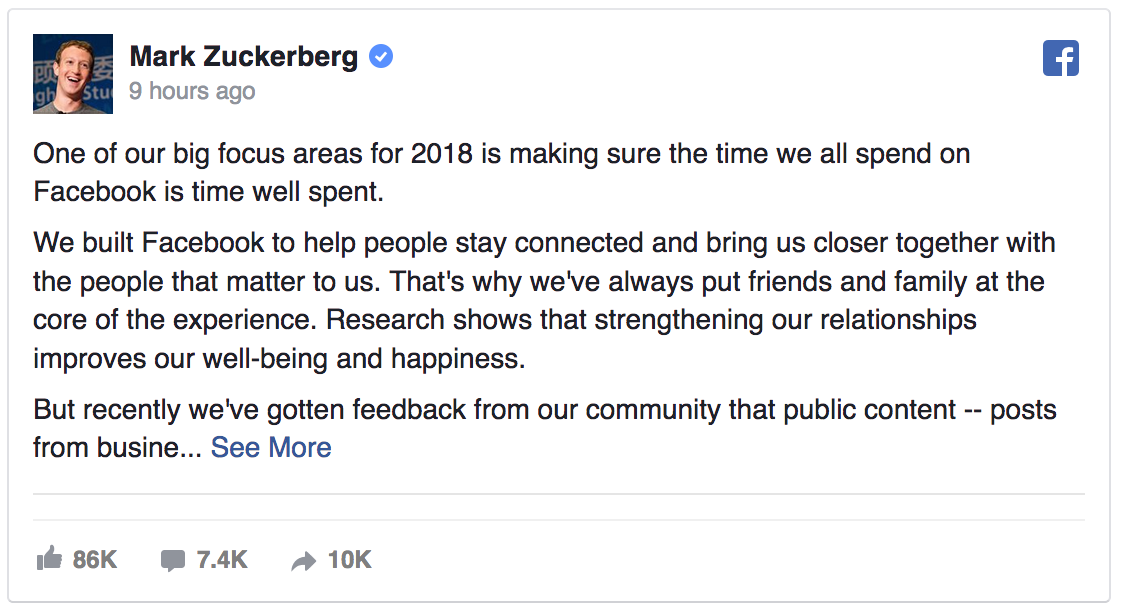
Mark Zuckerberg announced on the 11 January 2018 that significant changes to the Newsfeed are about to be implemented over the next few weeks. The focus being on posts from friends and family shown over businesses and publishers: "..prioritize posts that spark conversations and meaningful interactions between people."  The key here being people and no mention of organisations.

As for the future of the Facebook Newsfeed, Zuckerberg states users will see "less public content, including videos and other posts from publishers or businesses." See Mark's Facebook post below revealing this latest, significant update that will impact ALL businesses and organisations who use Facebook as a marketing tool to reach fans.

Mark Zuckerberg announces the end of the newsfeed for businesses as we know it

Due to the declining space availability in the Newsfeed, Facebook states that it wants to focus on "showing more posts from friends and family and updates that spark conversation means we’ll show less public content, including videos and other posts from publishers or businesses."

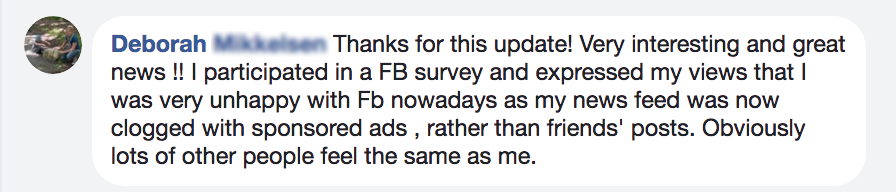
Interestingly, when I shared this article on my personal Facebook page a friend commented how relieved she was that "Facebook listened" about how she was sick of seeing "sponsored ads" in her newsfeed. Many like her will be thinking the same -  they don't realise that it's the organic reach that Facebook is severely cutting back on. They certainly aren't reducing paid advertising. Now, more than ever, Facebook is a "pay to play" platform.
facebook announcement zero organic reach

What Will Be the Impact on Business Facebook Pages?

This latest announcement has caused a huge stir in the social media marketing world. And so it should.  ALL Pages will notice a significant drop in organic reach as Facebook clearly states "As we make these updates, Pages may see their reach, video watch time and referral traffic decrease."

We have seen a declining organic reach for the past few years, with reach dropping from about 16% to 2% with speculation rife that it would drop even further, potentially to 0%.

Develop New Strategies

Let's be 100% clear about this annoucement - Facebook is effectively deprioritising business' posts. There are some who say it won't matter as much as the hype leads us to believe - we just need to "post relevant content and generate meaningful conversations" However, most businesses don't actually understand what this means and have been getting it wrong for awhile now. It's absolutely critical for businesses and organisations to develop a Facebook strategy that covers how to get around the algorithm - and that businesses will have to 'pay to play.'

Your emphasis must absolutely now be on posting highly relevant, entertaining content that appeals to your target market and definitely do not use 'engagement-baiting' techniques. Any posts that have a 'passive experience' in other words, no interaction from Fans, will definitely lead to no organic reach and will impact negatively on future posts. Properly understanding how the Newsfeed and algorithm works is vital. According to leading Social Media Expert, Micheal Stelzner part of this update will affect the strategy of linking to your blog from Facebook "The days of traffic from the Newsfeed to blog posts are dead."

If you have engaged a social media company or individual to manage your Facebook Page, and, if they haven't been in touch, make sure you initiate a meeting to discuss a revised strategy for your Page. Don't have a social media company? We offer consultancy, private training or you can attend a Facebook Group Training Session coming up in February 2018 in Dunedin.

If you want further information or advice on what to do for your Facebook Page, you can email philippa@cre8ive.co.nz

Please Share
cre8ive-facebook Cre8ive-Twitter

SWOT Analysis

SWOT analysis is an acronym for strengths, weaknesses, opportunities and threats and is a structured planning method that evaluates those four elements of an organisation. This analytical framework that can help an organisation face its marketing challenges and find its most promising new markets.

STRENGTHS

Within the organisation and external strengths, such as client relationships.

  1. What are your strengths?
  2. What unique capabilities does your business posses?

Possible strengths in marketing might be:

  • An innovative product or service
  • The location of the business
  • The reputation of the brand for being trusted or perceived as being of high quality

WEAKNESSES

Weaknesses are aspects of your business that detract from the value you offer or that place you at a competitive disadvantage.

  1. What are your weaknesses?
  2. What do your competitors do better than you?

Possible weaknesses might include:

  • Lack of a clear product/service differentiation
  • Weak distribution compared with competitors
  • Inadequate social media presence

OPPORTUNITIES

Factors that could lead to your business prospering.

  1. What trends may positively impact you?
  2. What opportunities are out there?

Potential opportunities could include:

  • The use of technology to develop new products
  • Growing demand from overseas markets
  • The use of new social media platforms to reach new target markets

THREATS

Includes external factors beyond your control that could place your strategy, or business, at risk. You have no control over these but you may benefit by having contingency plans in place.

  1. Do you have solid financial support?
  2. What trends may negatively impact you?

Possible threats could include:

  • Competitors introducing new products at lower prices
  • Changes in the economic environment
  • Changes in customer tastes and fashions
Please Share
cre8ive-facebook Cre8ive-Twitter

What Facial Expression Works Best for Fundraising?

The face, with its endless capability for communication, is believed to be the primary non-verbal channel for emotional communication. Have you ever wondered why we always see sad facial expressions for fundraising? It follows that images of victims on charity appeals attempt to elicit reactions such as sympathy and subsequently encourage donations.

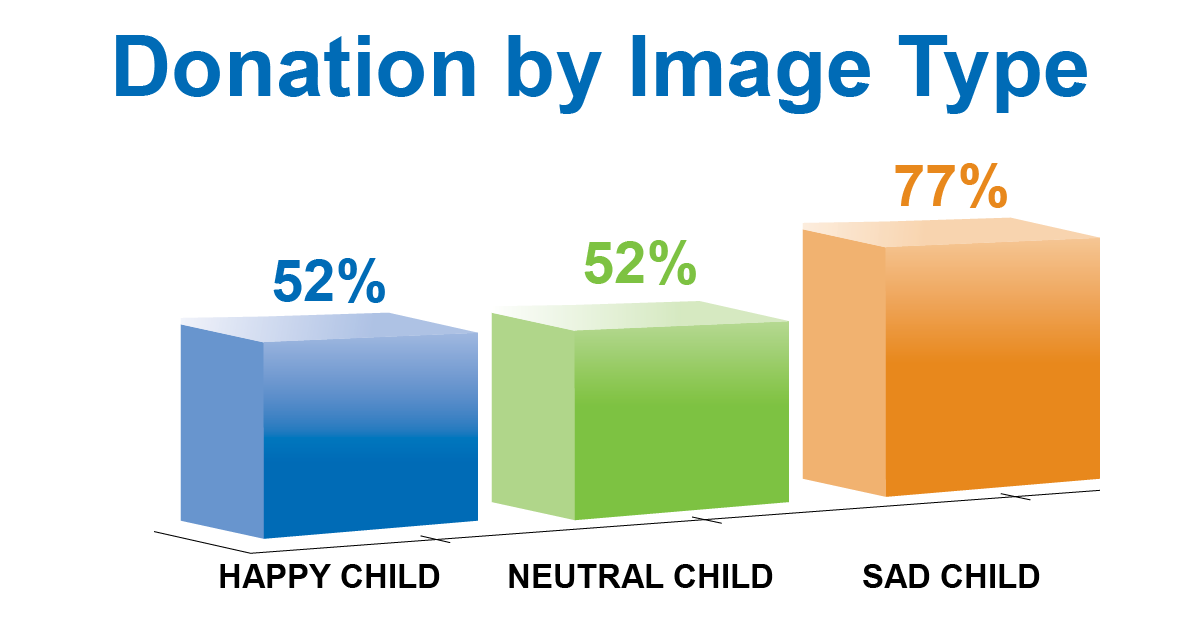
Research reported in the AMA Journal of Marketing Research - The Face of Need: Facial Emotion Expression on Charity Advertisements  found that sad faces prompt more giving:

"people are more sympathetic and give more to a charity when the victim portrayed on the advertisement expressed sadness than when a victim expressed happiness or neutral emotion.... Taken together, the findings imply the importance of subtle emotional cues that sway sympathy and giving."

One of the findings showed higher response rates for the sad child than the happy or neutral one:

Donation by image, Happy child, Neutral Child, Sad Child, Cre8ive Marketing If you have a fundraising campaign, think carefully about the emotion expressed on your lead image.

Develop Your Value Proposition

When it comes to choosing a product or service, customers have more options at their disposal than ever before. For your brand to stand out, you need to clearly define what your organisation offers that’s different to your competitors. To do this effectively, you will need to write a value proposition. It’s the primary reason a prospect should buy from you.

Basically the value proposition is a clear statement that tells your audience:

Believable and persuasive reasons people should notice you and take the action you’re asking for.
  • how your product/service solves customers’ problems or improves their situation
  • what specific benefits customers can expect
  • why they should buy from you and not from the competition

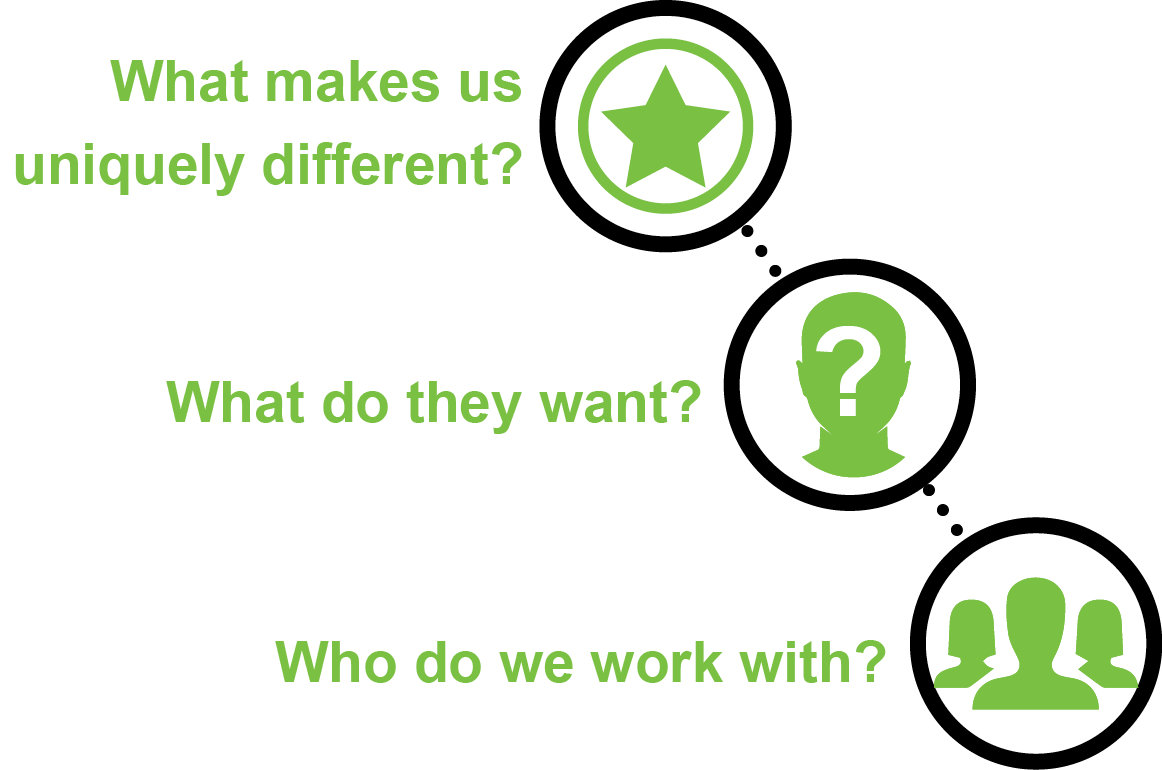
What makes you valuable?

People won’t buy from you if they don’t understand what you are offering and how it relates to them.

Develop Your Value PropositionWhat the Value Proposition consists of
There is no ‘right’ way to formulate your value proposition but here are some suggestions:

  • Headline. What is the end-benefit you’re offering in one short sentence. Can mention the product and/or the customer. This is the attention grabber.
  • Sub-headline or a 2-3 sentence paragraph. A specific explanation of what you do/offer, for whom and why is it useful.
  • 3 bullet points. List the key benefits or features.
  • Visual. Our brains process images 60,000 times faster than text. Show the product, the hero shot or an image reinforcing your main message.

A truly great value proposition paints a picture of your brand for prospects

Evaluate

Evaluate your value proposition by checking whether it answers these questions:

  • What product or service is your company selling?
  • What is the end-benefit of using it?
  • Who is your target customer for this product or service?
  • What makes your offering unique and different?

Examples of Value Propositions

Send Better Email
Just three words. That’s all that MailChimp needs to tell you what its brand is all about. It’s simple, direct, and clear. Use its service and you will send better email - end of story.


Shorten. Share. Measure
Known for its link shortening, Bitly is all about removing clutter and being concise, so it’s natural that the company’s value proposition reflect these traits as well.

The Uber homepage excellently conveys the simplicity and ease that lies at the heart of what makes it such a tempting service:

  • One tap and a car comes directly to you
  • Your driver knows exactly where to go
  • Payment is completely cashless

What the value proposition is NOT

It’s not a slogan or a catch phrase. This is not a value proposition:
L’Oréal. Because we’re worth it.

To assist in the development of your value proposition answer these questions

  1. Who is your customer?
    Demographics as well as details such as who influences the purchase, what are their values and what is the timeline for their purchase.
  2. What problem do you solve?
    From your customer’s perspective, what challenge are you solving for them?
  3. What are your distinctive benefits?
    List three to five benefits your customer gets from choosing your product/service that customers don’t get from going elsewhere.
  4. What’s your brand promise?
    This is like a pledge. What will you always do for your customers? It could be something like a money‑back happiness guarantee on every order.
  5. How does it fit together?
    Create a single paragraph from your answers so far, with the aim to end up with a unique message.
  6. Can you make it shorter?
    Now, refine. Take your time, review again and again until you’ve distilled your value proposition to one clear line that captures what you want to say.
Please Share
cre8ive-facebook Cre8ive-Twitter

What Works: Positive or Negative Superlatives in Headlines?

Do you want to write more effective headlines?

A superlative is an adjective of the highest kind, quality, or order; surpassing all else or others. It indicates the greatest degree of the quality that the adjective describes. Best is the superlative form of good; fastest is the superlative form of fast.

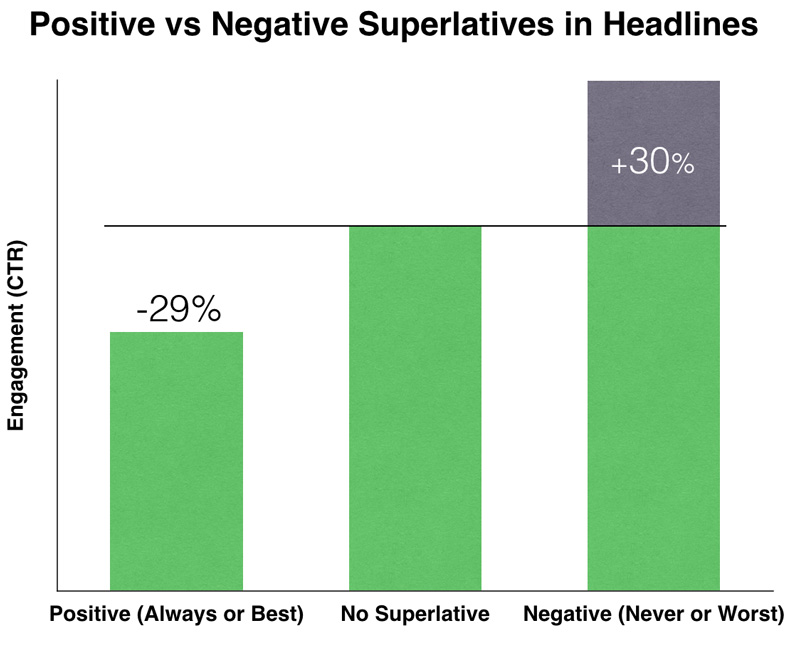
Superlatives - words like best, biggest, greatest - can be effective in headlines. But it turns out that negative superlatives (like least) can be even more powerful.

In a study of 65,000 titles, Outbrain compared positive superlative headlines, negative superlatives headlines and no superlative headlines. The study found that headlines with positive superlatives performed 29% worse and headlines with negatives performed 30% better. The average click-through rate on headlines with negative superlatives was 63% higher than with positive ones.

positive vs negative superlatives in headlines

There are a few theories on why this might be:

  • Positive superlatives may have become cliched through overuse, which leads to them being ignored.
  • It may be that negatives are more intriguing because they're unexpected and surprising.
  • Negatives also tap into our insecurities in a powerful way. Using negative words like "stop", "avoid," and "don't" often work because everyone wants to find out if there's something they're doing that they shouldn't.
  • Negative terms are more likely to be viewed as authentic and genuine.

In terms of news headlines, you are more likely to click on headlines like: "The worst economic dip in 30 years," "Unemployment numbers have never been lower," and "10 Ways Facebook is destroying your life."

Key Takeaways

When it comes to headlines, negative prevails over positive.

Please Share
cre8ive-facebook Cre8ive-Twitter


Ten Steps to Effective Facebook Marketing

Worldwide, there are over 1.86 billion monthly active Facebook users.

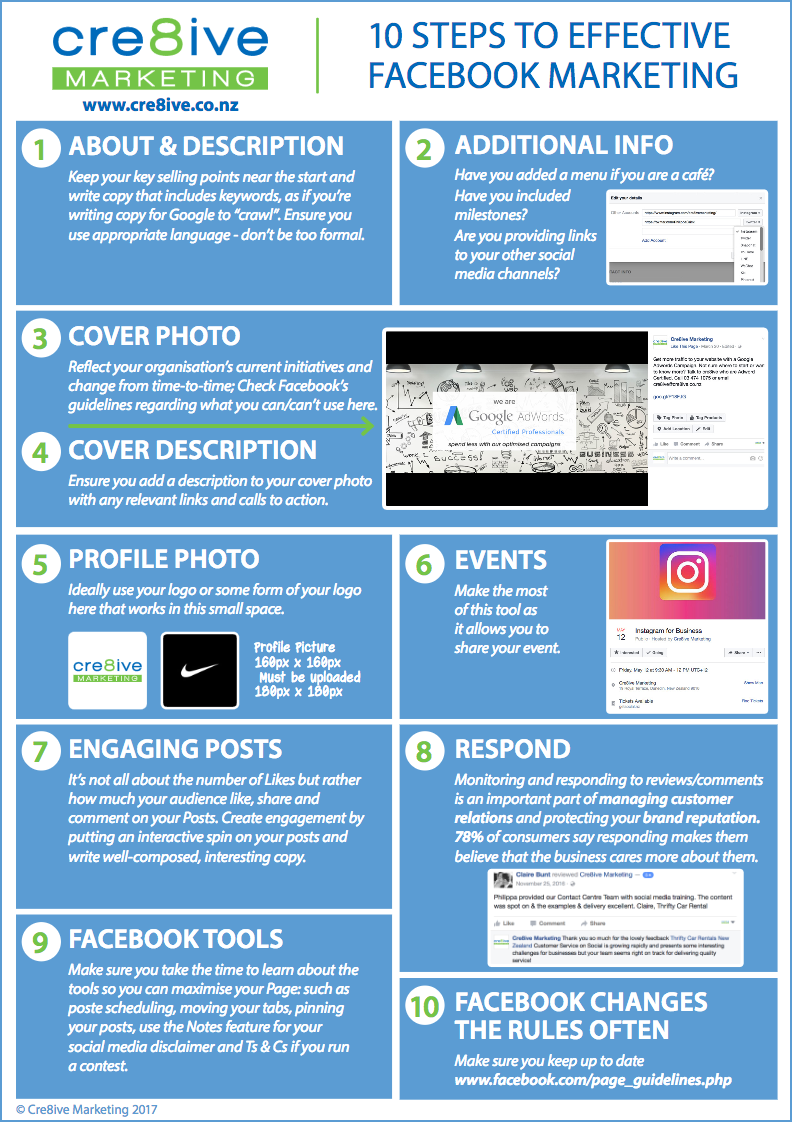
This platform offers more than just a way to stay in touch with friends and family; it is an essential item in the marketing toolbox. Facebook allows your business to be available to people on a trusted, popular platform, where prospects can see “real” people interacting with your brand. This is the foundation for you to build stronger relationships with them. Facebook often changes the rules and your audience changes their minds so what works today may not work tomorrow. You need to stay on top of the game by keeping up-to-date with the latest trends. Cre8ive has created a handy Facebook reference check sheet with the top ten points that every organisation should implement.

Need to know more? Through our training arm, Get Social, Cre8ive offers one-on-one Facebook Training for businesses - specifically tailored to your business or organisation. We can assist if you need help with maximising the Facebook tools, what to post and when to post, how to source ideas, how to advertise on Facebook, legal requirements and more! We will do an initial evaluation and audit of your page and go over the recommendations with you. Call Philippa 03 474 1075 to find out more or Email

Cre8ive's Facebook Guide


Please Share
cre8ive-facebook Cre8ive-Twitter


Write Better Press Releases With Our Guide

Press releases are a major part of your PR efforts. Before you sit down to write a press release read over these key tips and use the worksheet as a guide to ensure all critical information is included.

Press Release Tips

Start Strong
You only have a matter of seconds to grab your readers’ attention, so you want to capture it with a strong opening. Your headline, summary and first paragraph should clarify your news. The rest of your release should provide the detail.

Write Professionally
If your release contains hype, slang, excessive exclamation points or typos, chances are it will be viewed as an advertisement rather than a news release, which may hurt credibility. Or worse, a media outlet may pick up your release and publish without modification, opening any sloppy writing to a larger audience.

Limit Jargon
The best way to communicate is to speak plainly using ordinary language. Using an abundance of technical language and jargon limits your reading audience.

Make sure your Release is Informational and Timely
Think about your audience. Will someone else find your story interesting? Answer this question, “Why should anyone care?” Your release ideally will contain pertinent information that highlights something new or unusual, and provides useful information to your audience.

Avoid Clichés and Stick to the Facts
Avoid phrases like “customers save money” or “great customer service” to announce or describe. Focus on the aspects of your announcement that truly set you apart from everyone else. Avoid fluff, embellishments, hype and exaggerations.

Pick an Angle
Make sure that your release has a good hook. Tying your information to current events, recent studies, trends and social issues brings relevance, urgency and importance to your message.

Illustrate the Solution
Use real examples to illustrate how your organisation solved a problem. Identify the problem and why your solution is the right solution.

Include Great Visuals
We are in a visual revolution - it is vital to provide relevant and stunning images to back up your release. As the majority of people skim read, providing an image that supports your copy will enhance the chances that they remember something about your article or, even better, act on it.

Be Concise
News search engines sometimes reject news releases with overly long headlines, excessive lists and high overall word counts. Eliminate unnecessary adjectives, flowery language or redundant expressions such as “added bonus” or “first time ever.”

Proofread
Once written, print it and proofread it off-line. Edit and proofread again. Then pass it onto a colleague with a fresh pair of eyes to proofread again. We often miss our own errors.

Press Release Worksheet Questions

  • What is the news being announced?
  • What is the goal of this announcement?
  • What date is this announcement being made?
  • Why did you launch this product/service/event? Are there any statistics or data that will help make the case for why this is needed?
  • What is the most unique benefit of this news to audience?
  • What desire does it fill or problem does it solve? Why does anyone care? How is it different, better, new, innovative?
  • Is there a call to action? How does this prospective customer find out more? Do they call a phone number, go to a website, visit your booth, etc? (this will be used as a last sentence in the body of the press release)
  • Who can be quoted in the release to bring in a relevant viewpoint? Always get accurate information and sign‑off authorisation from anyone quoted.
  • What publications or other media do you want to release this to?
  • What type of tailored angle should you take in each release to get the editor’s attention.

How Cre8ive More than Doubled a Client’s Revenue in only a Year

Client: Airport Parking Provider

Business Type: Short or long term airport parking

Client Brief:
An Airport Parking Provider offering short and long-term airport parking for cars and large vehicles. Prior to Cre8ive’s involvement, the Provider had a template website and no online booking system. They engaged Cre8ive to develop and design their website, expand their customer reach and increase the number of bookings.

Our Solution:

  • Create a customised website with a 24/7 online booking system and Google Analytics setup for comprehensive monitoring
  • Develop a Google AdWords campaign targeting searches for “car parking” and “campervan parking” to maximise their capacity
  • Ensure correct geotargeting to not waste budget on irrelevant audiences
  • To carefully craft numerous text ads along with 175 selectively chosen keywords and negative keywords
  • Add ad extensions to increase online traffic on their Booking, Rates and Location pages
  • Tailor ads to both desktop and mobile formats to target customers on specific devices
  • Establish goals and e-commerce tracking

Outstanding Results:
The client was very satisfied with their easy-to-manage booking system, requiring less hands-on time for them. Our targeted campaign has reached up to an incredible 12.5% click-through rate. To put this in perspective, Google’s average click-through rate on AdWords paid search ads is only 2%. With an average ad position of 1.4, our Airport Parking Provider Ads are predominantly displayed at the top of search results.

Comparing the year prior to the Google AdWords campaign in place, their total revenue significantly increased by 123%!

If you want Cre8ive to take on the challenge of increasing your business by managing your Google AdWords account - learn more about our Google AdWords management services or get our FREE Google Adwords guide.  Get in touch with us today for your free estimate. Call 03 474 1075.

Email

Please Share
cre8ive-facebook Cre8ive-Twitter